
When a child experiences trauma, it can impact the entire family dynamic. As parents, you may feel uncertain about how to best support your child while also navigating your own emotional response. The good news is that you already have the tools to help your child heal—your love, your presence, and your willingness to listen.
Here are some empowering ways to support your child through trauma:
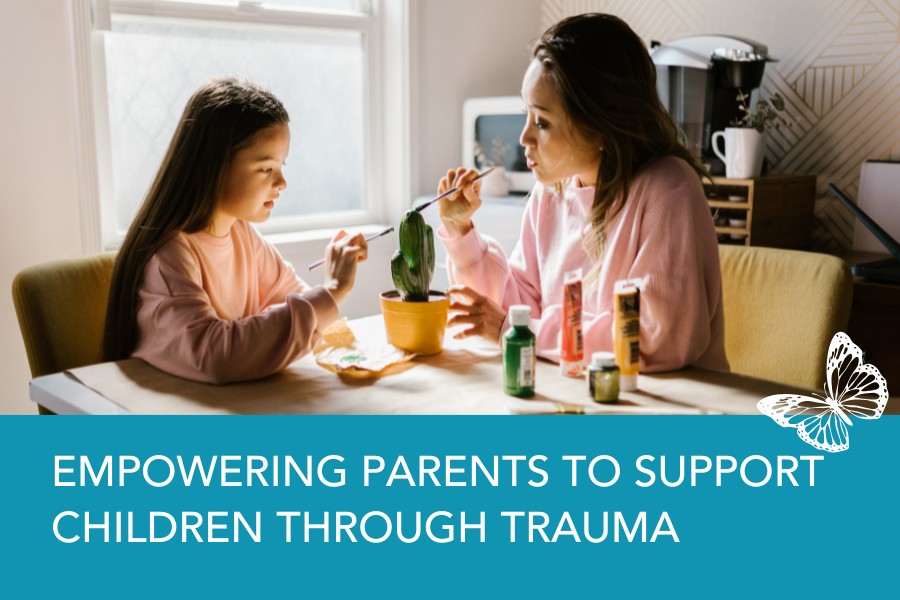
- Create a Safe Space for Expression: Encourage your child to talk about their feelings, but don’t push them to do so before they’re ready. Let them know that it’s okay to feel scared, angry, or confused. Offering a non-judgmental space where they can express themselves freely will help them process their emotions in a healthy way. Incorporate play, art, or other forms of expression to help create a healthy dialogue between you and your child.
- Validate Their Emotions: Children who have experienced trauma may feel overwhelmed by their feelings. Give them room to feel their emotions. Let them know that their emotions are valid, and avoid minimizing their experience. Simply saying, “I understand that you’re feeling sad, and that’s okay,” can go a long way in helping them feel heard and understood.
- Re-establish Routines: Trauma can create a sense of unpredictability in a child’s life. Re-establishing routines—like regular mealtimes, bedtimes, and family activities—can help your child regain a sense of stability. Familiar routines provide comfort and security, which are essential for healing.
- Lead with Patience: Healing from trauma is not a linear process, and your child may exhibit behaviors that seem difficult to understand. Try to respond with patience and empathy rather than frustration. Acknowledge that they are doing their best to cope, and remind them that you’re there for support.
- Model Emotional Regulation: Remember a child exists in relationship with their caregiver. This means children learn how to process emotions by watching how their parents manage their own. Take care of your emotional well-being so you can model calm and resilience. If your child sees you practicing self-care and managing stress effectively, they’ll be more likely to adopt those behaviors themselves.
- Make Time to Connect: Trauma has the power to disconnect the family unit and disrupt the attachment between the parent and child. It’s important to remember that on this healing journey, reconnecting with your child can strengthen your relationship and foster a strong sense of self within your child. Some myths suggest that resilience is built by conquering fears or making it through traumatic events. However, true resiliency is often developed in children through their ability to trust their caregivers and feel safe in their environment. It is helpful to view the connection between the parent and child as a holistic process, using physical, emotional, social, and spiritual ways to reconnect.
As a parent, your support is critical in helping your child heal from trauma. Trust that you have the strength to guide them through this journey, and remember that small, consistent acts of care can have a profound impact.
Written by Anttu Muhamed, MSW, Registered Social Worker